What a Stackable Washer and Dryer Project Taught Me About SPAX MDF Hardwood Screws
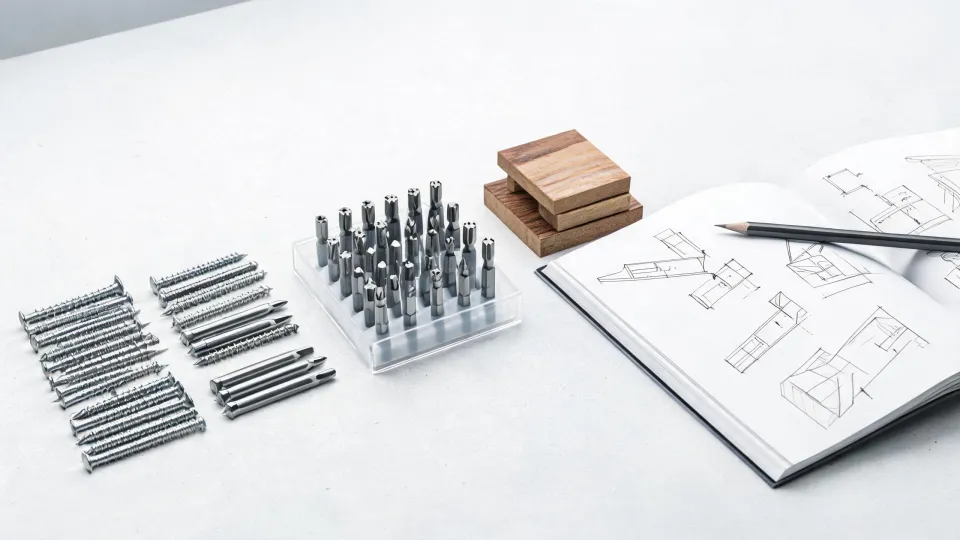
At 10:42 on a Tuesday, Dave, our maintenance lead, sent a message that made me stop pretending I knew what I was doing. He didn’t ask for toner. He asked for hardware, and he used a brand name like it meant something. The message said:
“Need a 14-inch pipe wrench. SPAX construction screws—3-inch and 2½-inch. Can you also get SPAX MDF Hardwood screws? Is there a hole saw in the shop?”
For context, I’ve been the office administrator for a 400-person company since 2020. I manage purchasing for three locations, which means I order everything from printer ink to pallet jacks. I process somewhere between 60 and 80 orders a year. I’m comfortable with suppliers, invoices, and delivery schedules. But I had never been asked for a specific brand of screw before. That day changed how I read a product listing.
The Real Project
The project was a compact stackable washer and dryer going into a former supply closet at our warehouse, so the crew could wash uniforms and shop towels in-house instead of hauling them out. The old machines took up too much floor space. Facilities picked a stackable washer and dryer set to free up room, and Dave was building the platform and access panel around it.
Dave is the kind of guy who doesn’t overexplain. He expected me to understand why he named a brand. I didn’t. My first instinct was to search for “wood screws,” compare prices, and pick the cheapest option. Good thing I called him first.
Why I Almost Ordered the Wrong Screw
When I asked Dave if we could use the generic screws we already had in the shop, he asked me what those screws had been used for. I said: hanging signs, fixing cabinet hinges, light shelf brackets. He said that was exactly the point. This was a laundry room project with a heavy washer and dryer stack. The platform had to hold weight, and the panel had to stay clean and secure. He didn’t want a screw that was “probably fine.” He wanted a screw that had a clear purpose and the specs to back it up.
That’s where SPAX construction screws came in. SPAX makes different screws for different jobs, and Dave treated the construction screws as the baseline for anything load-bearing inside the building. He was using them for the structural parts of the platform—not because the brand sounds professional, but because the product line is designed for construction and framing work. I didn’t need to know every load table by heart. I just needed to respect the specification.
What I really learned was simpler. I assumed that if a screw is called a wood screw, it works for any piece of wood. That assumption is wrong. MDF is not lumber. It has no grain, it’s dense in a different way, and it can chip or split if you use the wrong fastener geometry. Hardwood is not pine either. A screw that works fine in a 2x4 can behave completely differently in a hard, brittle panel.
Dave had asked for a separate box of SPAX MDF Hardwood screws for the prefinished MDF access panel. That product family exists because MDF and hardwood need a screw designed for those materials. If I had substituted a general-purpose screw, it might have worked for a day. It probably would have caused a headache later. I had already learned that lesson in 2024 during a vendor consolidation project: assume “same enough” and you will pay for it later. I didn’t make that mistake twice.
Pipe Wrench Sizes Are Not What I Assumed
Meanwhile, I had to figure out the pipe wrench. Dave asked for a 14-inch pipe wrench. I remember looking at the product page and wondering why he wanted a 14-inch wrench for what looked like a ½-inch pipe connection. That’s when I learned that pipe wrench sizes are not about pipe size.
A pipe wrench’s size is its overall length. The longer the wrench, the more leverage you get, and the bigger pipe it can usually open. But longer isn’t always better. In a tight supply closet, an 18-inch wrench can be awkward. A wrench that’s too small won’t give you enough leverage to break loose an old threaded fitting. Dave chose a 14-inch wrench because it gave him the reach and leverage he needed without being impossible to swing behind the stackable washer and dryer setup.
If you’re ordering a pipe wrench for a similar job, ignore the pipe diameter when reading the size. Look at the wrench length, the handle, and the space you’re working in. And if you’re not sure, ask the person holding the wrench. That advice has saved me more times than I can count.
How to Cut a Hole in Wood Without a Hole Saw
Now for the part that made Dave laugh. He asked if we had a hole saw. We didn’t. He said it wasn’t a problem. If you’ve ever searched how to cut a hole in wood without a hole saw, here’s what he did on the MDF panel:
He marked the circle by tracing the dryer vent cover. Then he scored the line with a utility knife before cutting. That step matters more with MDF than with plywood. A scored line helps keep the surface from chipping when the blade enters the cut. Next, he drilled a small starter hole just inside the waste area, inserted a jigsaw blade, and cut along the line slowly. He didn’t try to rush it. When the circle was finished, he cleaned up the edge with sandpaper.
The hole wasn’t perfectly machined like a hole saw would have made it, but it didn’t need to be. The dryer vent cover covered the edge. What mattered was that the cut was clean, the panel didn’t split, and the stackable washer and dryer install was done without buying a tool we would only use once.
The Part That Surprised Me
By the end of the week, the project was finished. The stackable washer and dryer was in place. The platform was solid, the panel looked clean, and the old supply closet finally worked as a laundry room. Dave didn’t make a big deal about it. He just moved on to the next task.
What stuck with me was how much I had assumed about something I thought was simple. A screw is not just a screw. A pipe wrench is not measured by pipe size. And there’s a huge difference between cutting a hole with the right tool and knowing how to cut one without it.
If you’re in a buying role and a maintenance person sends you a list like that, don’t guess. Call them. Ask them what the fastener is holding, what material it goes into, and why they picked that product. It takes five minutes and it prevents the kind of mistake that costs more than the screw.
I still don’t build things for a living. But I’m better at buying for someone who does. And I now know exactly what to order when the stackable washer and dryer project comes up again at one of our other locations.

Maren Jorgensen
Maren Jorgensen is an independent hand tool and torque applications analyst covering wrenches, pliers, screwdrivers, hammers, sockets, ratchets, hex keys, and tool sets. She applies ISO 6789-1 torque-tool conformance principles while examining jaw capacity, leverage, fastener engagement, torque range, accuracy, handle geometry, and material hardness. Her practical guides help tradespeople and procurement teams select suitable tools, plan controlled tightening, and compare durability without relying on brand reputation alone.