SPAX Screws for MDF and Multi-Material Construction Screws: The Total-Cost View
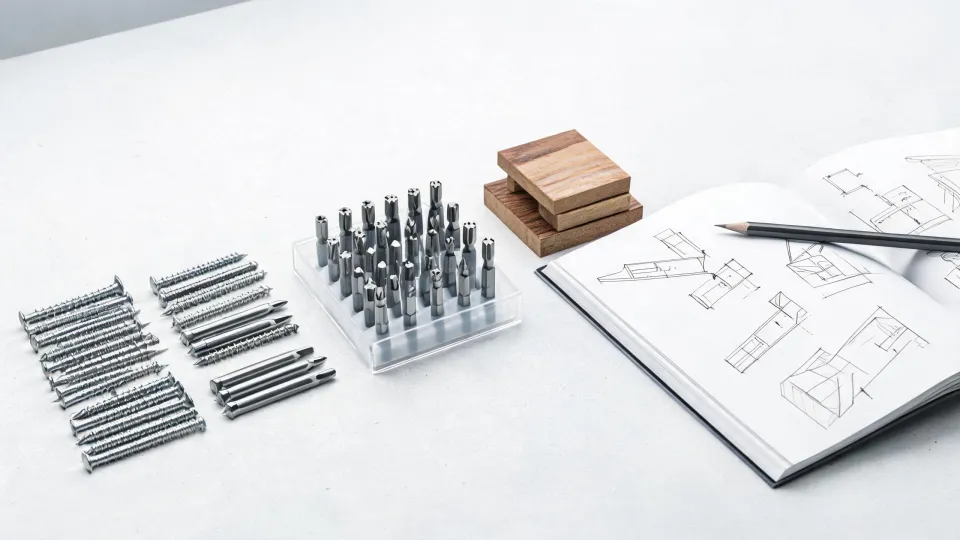
Let me start with a clear opinion: The lowest price per screw is not the lowest cost of using it. I make that statement as a quality and compliance manager at a fastener distribution company. I review about 200 fastener lots each year before they are cleared for the shelf. In Q1 2025 I rejected roughly 8% of first deliveries because the product was not consistent enough for the label. The issue was not always a single bad fastener. It was often a good box and a bad box wearing the same name.
This is not a lecture against low-cost fasteners. It is a warning against stopping at unit price. Some less expensive fasteners are fine. The problem is that unit price does not tell you which ones they are.
I only came to this conclusion because I ignored it. In 2022, I approved a fastener lot because the bid was the lowest and the spec sheet looked reasonable. We saved around $190 on the box price. The next week, stripping and snapped screws turned the installation schedule into a recovery project. After extra labor, removed fasteners, and replacement material, the rework cost approximately $3,400. That number is burned into my total-cost training.
Total cost includes installation, rework and time
Total cost includes unit price, but it also includes labor, substrate waste, tooling, and schedule impact. If a screw strips a piece of MDF at the last step, the installed value of that cabinet is gone. If a drywall screw is overdriven, the taping crew pays for the repair. Every screw is an installation system, not just a commodity.
What I check when I evaluate SPAX
SPAX is one of the brands I have spent the most time reviewing. I do not look for the word strongest, and I do not trust a promise to never split. I look for documented application range, consistent drive geometry, and realistic limitations.
SPAX multi-material construction screws are a good example of what I mean. The line is designed for mixed-substrate work, and the practical quality feature is a Torx/wafer head that resists cam-out. When a crew is driving hundreds of fasteners, drive consistency is not a cosmetic detail. It is labor savings and less rework. The thread profile is meant to pull into dense wood and selected metal profiles, but I still verify the exact substrate in the manufacturer's guide. There is no universal construction screw. Buying the right range is not the same as buying a magic box.
SPAX screws for MDF are a different specification
MDF is a material that punishes guessing. It has no grain in the way solid wood does. Most of its strength comes from compressed fibers and resin, and a thread that is too aggressive can push those fibers apart before it grips. When I specify SPAX screws for MDF, I am choosing a product whose point and thread geometry are intended for that panel behavior. That does not remove the need for a pilot hole in thin edges or for a length check on the actual material thickness. But it reduces the chaos that comes from grabbing a random deck screw and hoping MDF will behave like lumber.
For structural fastener decisions, I do not substitute an alternative based on a visual match. I am not a structural engineer. If the approved plan calls for a structural fastener such as a SPAX Powerlag, I want the manufacturer's evaluation report and installation instructions on site. The paper trail is part of the fastener's total cost. Skipping it to save a few minutes can quickly become the most expensive decision on the job.
A 30-inch rolling tool cart is part of quality control
Fastener failures rarely start at the fastener. They start when the wrong screw is within reach and the right screw is on the truck. I often see substitution errors in field audits. A 30-inch rolling tool cart fixes that by turning the workspace into a quality station.
Set it up with labeled containers for SPAX screws by type and length, a drywall screw gun kit, spare bits, and a small board for testing. Now the correct fastener is twenty seconds away. The setup does not add glamour, but it reduces the chance that someone will make a temporary choice that becomes permanent.
What length drywall screw should you use?
I get this question on almost every drywall job. The answer starts with the board and framing. For 1/2-inch drywall attached to wood studs, my usual starting point is a 1-1/4-inch drywall screw. For 5/8-inch drywall on wood studs, I normally move to a 1-5/8-inch drywall screw. If the framing is steel, switch to a self-tapping drywall screw designed for that stud gauge and follow the manufacturer's recommended length.
A longer screw is not automatically stronger. Extra length can hit a wire, a pipe, or the back side of the wall. When I need certainty, I drive one screw into the same material sandwich, pull it out, and measure how much thread entered the framing. This takes longer to describe than to do.
Length answers part of the problem. A drywall screw gun kit answers the other part. The nose depth control stops each screw at the same point, leaving the head just below the surface of the board without tearing the paper. If you are setting drywall screws with an impact driver, you are betting on wrist feel for every fastener. You will eventually win most of those bets. The losing bets become sanding, patch work, and callbacks. A drywall screw gun kit reduces those losses by taking depth out of the operator's hands.
But the better screw costs more per piece
That is a fair objection, and I do not dismiss it. I review budgets. But when the price difference is measured in cents and the failure cost is measured in hours, the lower piece price often loses the total-cost calculation.
I am not claiming that SPAX is the only fastener worth using. Simpler projects may not require the same fastener as a high-moisture exterior deck or a cabinet-grade MDF edge. My point is to make the choice after looking at application, rework risk, labor, and tooling, not before.
So here is my final opinion: unit price is a starting point, not a decision. Good fasteners are one part of the system. Good tooling is another. A reliable screw, a 30-inch rolling tool cart with the right parts nearby, and a drywall screw gun kit with depth control will consistently produce better work than the same crew working without a system.
I have rejected products based on drive consistency even when the label looked the same. I have approved products with a higher unit price because the installed cost was lower. That is the only number that matters.

Maren Jorgensen
Maren Jorgensen is an independent hand tool and torque applications analyst covering wrenches, pliers, screwdrivers, hammers, sockets, ratchets, hex keys, and tool sets. She applies ISO 6789-1 torque-tool conformance principles while examining jaw capacity, leverage, fastener engagement, torque range, accuracy, handle geometry, and material hardness. Her practical guides help tradespeople and procurement teams select suitable tools, plan controlled tightening, and compare durability without relying on brand reputation alone.