SPAX MDF Screws vs Generic All-Purpose Screws: The $2,400 Rework and the Stainless Steel Drill Bit Lesson
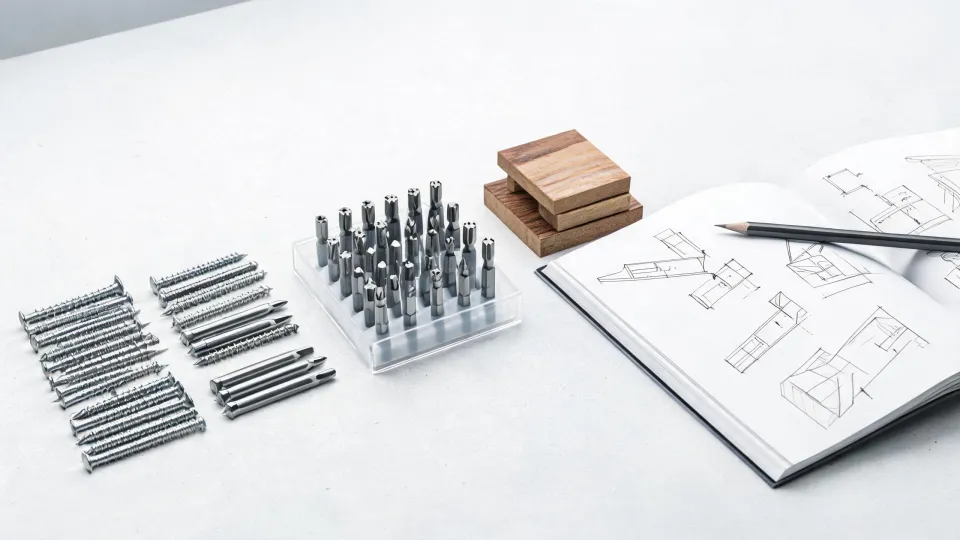
I've been handling construction fastener orders for commercial millwork and cabinet shops for 9 years. I've personally made (and documented) 5 significant mistakes, totaling roughly $7,800 in wasted budget. Now I maintain our team's prep checklist to prevent others from repeating my errors. This is the comparison I wish I'd had in 2018.
If you're searching for spax mdf screws, you're probably deciding between SPAX and the cheaper all-purpose screws in the bin. Here's the framework: drive and head, thread and point, total cost, and, because jobs rarely stay in one material, drill bits for stainless steel. I'll compare each directly.
Drive and Head: Where MDF Punishes Cheap Fasteners First
Generic all-purpose screws often use Phillips or combo drives. In MDF, that's a problem. MDF is dense and uniform. There's no grain to guide the screw. A Phillips bit cams out when torque spikes. You slip. You scar the panel. Or worse, you strip the head and can't remove the screw without damaging the bore.
SPAX MDF screws typically use a Torx-style drive and a wafer head. The Torx drive has more contact points. That means less cam-out and more torque transfer. The wafer head sits flatter and spreads load. Is it magic? No. If you overdrive it or use the wrong bit, you'll still ruin the panel. But the drive geometry gives you a bigger margin for real-world mistakes.
My first-year mistake: I assumed all MDF screws were the same. In 2018, I approved a generic 1-5/8 inch screw for a cabinet run. We stripped 38 heads in one afternoon. The rework cost $860 in labor and material. That's when I learned to check the SPAX logo on the packaging and confirm the bit size printed next to it. Use the exact bit. Don't guess.
Thread and Point: Designed for MDF vs It'll Probably Work
Generic wood screws are built for lumber. They have coarse threads and a sharp point. In pine or plywood, they can work fine. In MDF, coarse threads can act like a wedge. They create stress around the hole. You get bulging, blowout, or a joint that never pulls tight.
SPAX MDF screws are designed for engineered wood. The thread pattern, point, and shank are matched to MDF's density. That doesn't mean you can ignore pilot holes or torque settings. It means the screw is starting from a better design point. If you're fastening near an edge or using thin panels, you still need to test and follow the manufacturer's guidance.
Here's the thing: the difference isn't always visible in a single screw. It shows up on the 200th screw, when your operator is tired and the bit slips. Better geometry doesn't make mistakes impossible. It makes them less likely and less expensive. As of May 2026, SPAX publishes recommended bit sizes and torque values in its technical documents. Use them.
Total Cost: The $60 Savings That Cost $400
Look, I'm not saying budget fasteners are always bad. I'm saying they're riskier. The sticker price is not the total cost.
In 2021, I saved $60 by buying a cheap box of no-name bits instead of the recommended bits. Two days later, we burned through four bits on a single MDF run. The cam-out damaged 12 cabinet doors. We spent $400 on replacement doors and a full day of rework. Net loss: $340 plus credibility. That's the value-over-price lesson in one line.
The upside was a lower invoice. The risk was stripped heads on a deadline. I kept asking myself: is the savings worth potentially losing a client over a callback? That question has saved me more than once.
This is the same math I use for shop tools and appliances. I don't buy an overdrive mechanics tool set 121 pieces just because the price looks good; if the ratchet strips or the sockets skip, the cheap set costs more in rounded bolts. Same with a washer and dryer. The sale price isn't the total cost once you add hoses, install, repairs, and energy. Fasteners are smaller, but the hidden-cost pattern is identical.
When you compare SPAX MDF screws to generic screws, add up: stripped heads, damaged panels, replacement hardware, labor, schedule delays, and callback risk. In my experience managing these orders, the lowest quote has cost us more in 60% of cases once rework is included.
Drill Bits for Stainless Steel: What Drill Bit Is Needed for Stainless Steel?
Most MDF jobs eventually hit stainless steel: handrails, brackets, appliance trim, outdoor kitchens. The question what drill bit is needed for stainless steel has a short answer and a long answer.
Short answer: use a cobalt or carbide-tipped bit made for stainless. A standard HSS bit can work for a hole or two if you're lucky, but stainless work-hardens fast. The moment you spin the bit without cutting, the surface gets harder. Then you burn the bit and polish the hole.
Long answer: match the bit to the stainless grade and thickness. Use a 135-degree split point for less walking. Run low RPM with firm, steady pressure. Use cutting fluid or at least a lubricant. Don't let the bit rub. If you're drilling 304 or 316 stainless, cobalt M35 or solid carbide is the safer choice. For deep holes, peck drill and clear chips. Machinery's Handbook and most cutting-tool guides recommend the same low-speed, high-feed approach for stainless.
The value trap is identical to fasteners. A cheap no-name bit that burns out after six holes isn't cheaper than a proper cobalt bit that drills 40. The cheap bit also risks your workpiece, your knuckles, and your schedule. The surprise wasn't the price difference. It was how much time we lost learning it.
What I'd Choose in Each Situation
There's no universal winner. It depends on the job.
- Production cabinet or millwork shop, MDF panels: Use SPAX MDF screws and the exact driver bit recommended on the packaging. The lower cam-out and consistent torque transfer pay for themselves in reduced rework. Confirm the SPAX logo and part number with your distributor, especially if you're buying bulk.
- One-off repair, hidden joint, low torque, you have the right bit: A quality generic screw may be fine. Test on scrap. Don't assume.
- Stainless steel fastening: Use cobalt or carbide bits, low speed, cutting fluid. If you're drilling more than a few holes, buy the right bit before you start. This is not the place to save a few dollars.
- Mixed-material crew: Build a bit kit by material. Label it. I keep MDF, wood, and stainless bits separate. After the third stripped-head afternoon in 2019, I was ready to ban all combo drives from the shop. What finally helped was a pre-start check: material, screw type, bit type, torque setting. In that order.
The Checklist I Use Now
Before any MDF run, we confirm four things: the panel type, the SPAX MDF screw part number, the exact driver bit, and the driver clutch setting. We also keep a stainless steel drilling card at the bench with bit type, RPM range, and lubricant reminder.
Why does this matter? Because most fastener failures aren't dramatic. They're small slips, stripped heads, and we'll fix it later. Later is where the budget goes to die.
If you're comparing SPAX MDF screws against a cheaper all-purpose option, don't stop at the unit price. Add the rework, the damaged panels, the replacement bits, and the schedule risk. Then decide. That's the comparison that actually matters.

Amara Nwosu
Amara Nwosu is an independent hydraulic tool and pump systems analyst covering jacks, cylinders, pullers, torque wrenches, hand pumps, power pumps, and porta-power equipment. She applies ISO 4413 safety principles while examining rated pressure, cylinder force, stroke, oil volume, flow, return type, hose condition, load holding, pressure loss, and relief protection. Her technical guides help maintenance and construction teams configure compatible systems, verify safe capacity, and diagnose slow or unstable operation.