SPAX Flat Head Multi-Material Screws: Sizes, 1/4-in Fender Washers, and the Impact Wrench I Spec
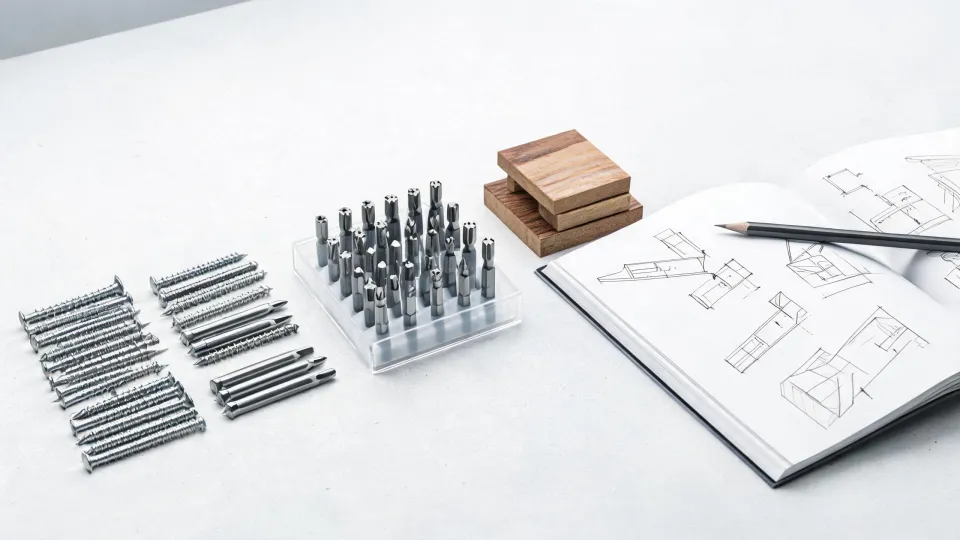
I spec the SPAX flat head multi-material construction screw for almost every job that comes through our shop. Not because it's the cheapest fastener—it isn't. Because when I run the numbers per installed screw, it's the best value in our fastener budget by a wide margin.
That margin has saved us roughly $8,400 a year in rework and callback labor since I switched our specs in 2023. I'm a procurement manager at a 38-person general contracting firm. I've managed a materials budget of about $600,000 a year for seven years, and I track every screw order in our cost system. Here's the practical version of what I've learned about SPAX sizes, when you actually need a 1/4-in fender washer, and what impact wrench to put in your crew's hands.
The Only Number That Matters: Cost Per Installed Screw
When I first started buying fasteners, I assumed the lowest quote per box was the right call. Three rework cycles later—stripped heads, split trim, deck boards that squeaked loose—I learned the difference between unit price and installed cost.
The math is brutal. A generic deck screw runs about $0.04 each. It works maybe four out of five times. The fifth time, a carpenter spends ten minutes extracting, re-drilling, and replacing. At a blended labor rate of $65/hour, one strip-out costs more than an entire box of SPAX screws. The SPAX multi-material screw at $0.09 each drives clean, seats flush, and doesn't come back. That's the difference between buying hardware and buying certainty.
The surprise wasn't the price gap. It was how much hidden value came with the "expensive" option—consistent drive, a self-tapping tip that eliminates pre-drilling in most wood and composite materials, and a coating that holds up in treated lumber.
SPAX Screw Sizes: Match the Length to the Material, Not the Screw
The thing most people get wrong about SPAX screw sizes: the number you need depends on the materials you're joining, not on the screw itself. A #8 is a #8. But a 1-1/4-in #8 in cabinet trim and a 3-in #8 in a deck are completely different animals.
For the flat head multi-material construction screw, here's what our yard stocks and why:
- #8 x 1-1/4 in. — cabinet installation, interior trim, door jambs. About 60% of our interior trim work runs on this size alone.
- #8 x 2-1/2 in. — the workhorse. Hardwood trim, face frames, exterior casing where the screw needs real bite.
- #10 x 3 in. — deck boards, fence pickets, structural attachment of 2x lumber.
- #10 x 4 in. — thick composite decking, layered assemblies, attaching framing members to the structure.
A practical rule: the threaded portion should extend at least 1 inch into the receiving member for wood-to-wood connections. For composite decking, go at least 1-1/2 inches. That's why a 3-in screw through a 1-in deck board leaves about 2 inches in the joist—which is exactly where you want it.
The flat head itself matters more than most people realize. The tapered underside creates clamping force that a pan head or oval head can't match. On composite decking, that clamp is what stops the board ends from working loose over time.
And before anyone slaps this on a concrete form: "multi-material" has limits. It's designed for wood, composite, and light-gauge steel. It is not a masonry screw, and it's not rated for below-grade contact. Check the technical data before you spec it in anything unusual.
Do You Actually Need a 1/4-in Fender Washer?
Short answer: less often than you'd think.
A fender washer 1/4 in. has a 1/4-in inner hole and an outside diameter around 1 inch. The wide face spreads clamping load so the screw head doesn't pull through soft material. That's useful. But it's not needed in most standard SPAX applications—and in some cases, it can work against you.
Here's the counterintuitive part: a flat head screw is designed to seat flush with its tapered underside. Add a flat fender washer under that head, and the taper never touches the material. The clamping force concentrates on the inner edge of the washer instead of spreading across the head. You've added a part and reduced the effectiveness of the screw at the same time.
Use a 1/4-in fender washer when:
- The material is soft enough that the head will sink in—cedar, redwood, PVC trim.
- You're fastening a thin board with a larger screw and need to bridge a slot or oversized hole.
- Pull-through strength of the plain head is a genuine concern in the assembly design.
Skip it for standard decking and framing. The screw was designed to do the job without it.
One clarification, because this keyword keeps showing up in our search analytics: a washer valve is a plumbing component—the valve that controls water flow on a pressure washer or inside a faucet. It is not a fastener accessory. I've had procurement colleagues try to bundle them into a single order and get burned on lead times. Different product category, different vendor, different delivery schedule.
What Size Impact Wrench Should You Get?
Straight answer: a 1/4-in hex impact driver for everyday SPAX screws, and a 1/2-in impact wrench for Powerlags and structural fasteners. The 3/8-in sits in an awkward middle that doesn't serve most crews well.
Here's why.
The 1/4-in hex impact driver takes standard Torx bits directly. It's light, maneuverable, and modern brushless models put out roughly 1,500 to 2,000 in-lb of torque. That's enough for any SPAX construction screw up to about 3-1/2 in. long. Use this for trim, cabinets, and decking—the jobs that eat 90% of your fasteners. (Torque numbers vary by brand and battery platform, so compare spec sheets before you buy.)
The 3/8-in impact wrench with a hex adapter can drive SPAX screws, but it's a compromise. More power than you need for a #8, not enough for a long Powerlag in dense hardwood. When the 3/8 stalls on an 8-in structural screw, the instinct is to blame the screw. The screw is fine. The tool is undersized.
The 1/2-in impact wrench is the right call for structural work. Powerlags, heavy timber connections, pulling old lag bolts out of framing—the 1/2-in handles it without stalling. It's also useful for a dozen other tasks on site, which makes the higher cost and heavier weight easier to justify. If your crew touches structural fasteners at all, buy the 1/2-in.
One more thing on tools: don't put cheap Torx bits in front of your crew. This is not a place to save money. A generic $2 bit wears quickly and starts rounding out screw heads. The bit costs $2, but each stripped screw costs about $16 in labor and materials. One strip-out per bit eliminates the savings entirely. We track this in our consumables budget—quality bits cost more upfront and measurably less over the year.
What the Procurement Data Shows
After more than 40 fastener orders tracked in our system, three hidden costs stand out.
First, stripped heads are the number-one source of fastener-related rework, and in most cases it's a bit-wear problem, not a screw problem. Second, over-spec'ing—buying #10 screws where #8 would do—quietly inflates the fastener budget by about 8% a year. The most frustrating part: nobody notices until the annual review.
Third, under-spec'ing is worse than over-spec'ing. We used standard wood screws on a composite deck in 2023. Five boards worked loose within a year, and the repair ran $1,200. The correct screw from the start would have been a $12 difference. That's the clearest example I have of the certainty principle: knowing the fastener will hold is worth paying a premium for.
Looking back, I should have caught that deck early. At the time, the $12 line item on the estimate looked like a place to trim. It wasn't.
When I Don't Use SPAX Multi-Material Screws
To be clear, it's not the right choice everywhere. I still spec different fasteners for:
- Metal-to-metal connections — a self-tapping screw with a drill point is usually better here.
- Masonry or concrete — use a true concrete screw or wedge anchor. The multi-material screw isn't rated for that.
- Below-grade or continuous immersion — coatings have limits. Check the exposure ratings in the technical data.
- Temporary work — if bracing only needs to hold for a week, a $0.03 coated screw does the job. Don't burn premium fasteners on temp work.
The discipline of matching the fastener to the application cuts real cost. It matters just as much as choosing a good brand in the first place.
None of this shows up on a purchase order as a line item. But it shows up on the P&L, and it shows up in your callback log. That's where the real cost of a fastener lives.

Maren Jorgensen
Maren Jorgensen is an independent hand tool and torque applications analyst covering wrenches, pliers, screwdrivers, hammers, sockets, ratchets, hex keys, and tool sets. She applies ISO 6789-1 torque-tool conformance principles while examining jaw capacity, leverage, fastener engagement, torque range, accuracy, handle geometry, and material hardness. Her practical guides help tradespeople and procurement teams select suitable tools, plan controlled tightening, and compare durability without relying on brand reputation alone.